Byd races ahead: solid-state battery ambitions threaten catl dominance
China’s BYD is aggressively pursuing a technological leap, aiming to dethrone CATL as the global leader in battery production and staking its claim as the vanguard of electric vehicle (EV) transition. The move, spearheaded by CEO Yang Wang, isn’t about incremental improvement; it’s a calculated bet on solid-state technology.
A race against the clock
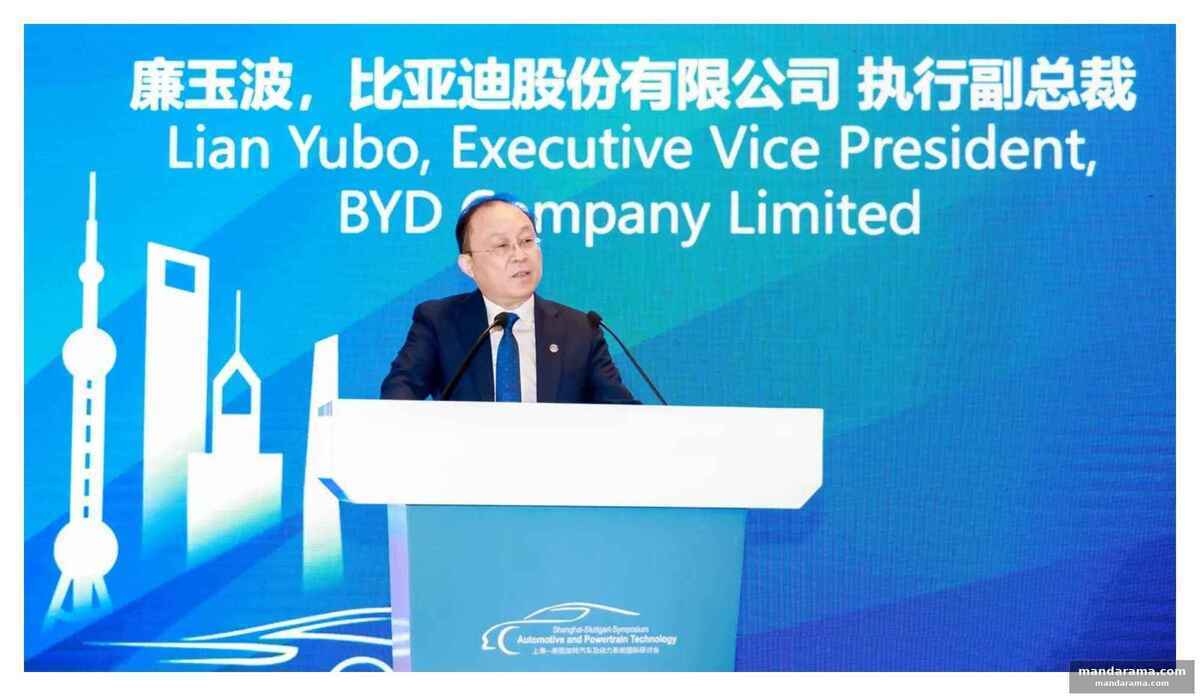
According to Lian Yubo, BYD’s chief scientist, the company’s ‘Blade Battery 2.0’ and flash charging initiatives have officially transitioned from theory to critical development phase. This isn’t a passive observation; they’re actively wrestling with material accessibility and manufacturing processes – a brutally pragmatic approach, considering the current exorbitant cost of solid-state components. It’s a tall order, frankly, and Yubo himself admits the road ahead is paved with significant hurdles. Commercialization, initially, will be restricted to exclusive models – think Yangwang, for example – a carefully curated rollout designed to test and refine the technology.
Geely’s recent launch of the Starray EM-i MAX in Spain – boasting a staggering 1,000km range – underscores the growing pressure on automakers to deliver on range promises. But BYD’s ambitions extend far beyond simply meeting current demands; they're building for the future, and that future hinges on mastering solid-state chemistry.
Solid-state reality
The transition to solid-state batteries represents a fundamental shift in EV architecture. While laboratory results are promising, the path to mass production remains riddled with challenges. Scaling up manufacturing, convincing established Automotive partners, and, crucially, driving down the cost – a massive undertaking – are all significant roadblocks. BYD’s initial pilot production in 2027 will likely be a luxury offering, a proof of concept rather than a mass-market solution. The company anticipates limited production runs for the Yangwang brand, utilizing sulfide-based electrolytes – a particularly expensive component.
Despite these obstacles, Yubo remains cautiously optimistic. He’s forecasting that, by 2030, BYD could achieve economically viable solid-state battery production, potentially unlocking more affordable EVs. However, the current Blade Battery, already delivering over 1,000km of range under CLTC conditions, is expected to coexist with solid-state technology for the next two decades – a testament to its enduring value.

A calculated gamble
It’s a calculated gamble, certainly. But for BYD, the potential reward – complete control of the battery supply chain and a dominant position in the global EV market – is simply too significant to ignore. They’re not betting everything on a single technology; they're layering their strategy with existing strengths, demonstrating a healthy skepticism about relying solely on unproven innovations. Let's be clear: this isn’t about hype; it's about ruthless engineering and a relentless pursuit of technological supremacy.