Callaway sledgehammer: the 880-hp corvette that shattered speed records
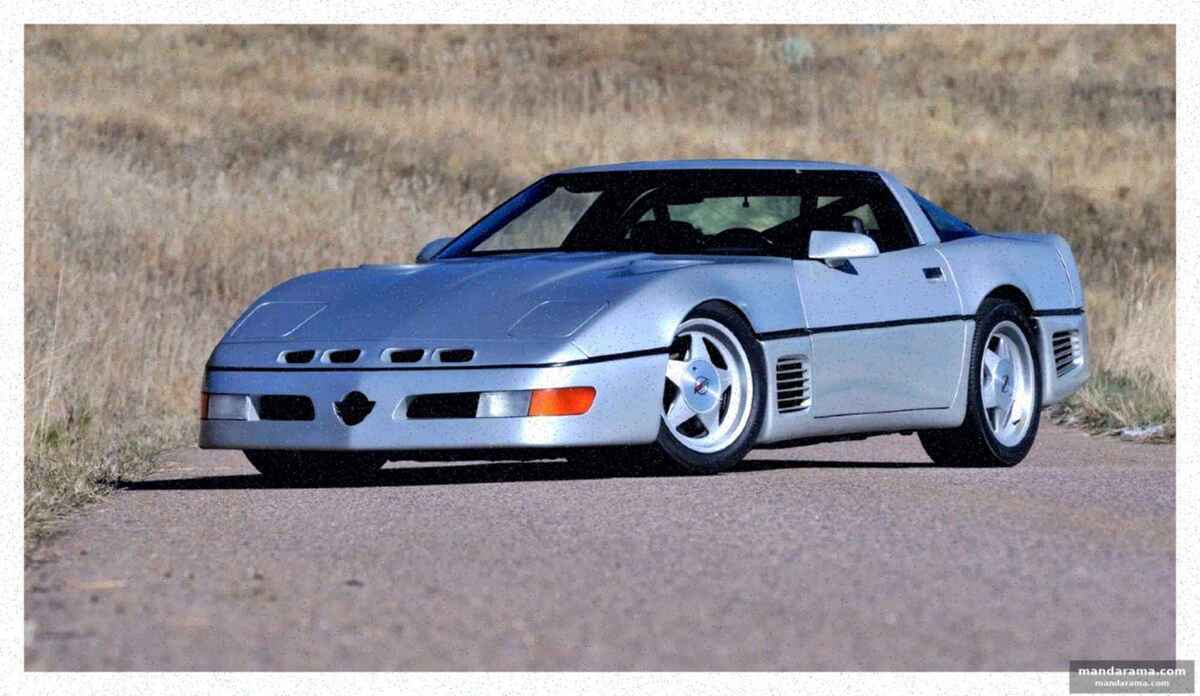
Before Bugatti’s dominance and the electric hypercar frenzy, there was a raw, unapologetic American beast that redefined what was possible: the Callaway Sledgehammer. This wasn't a meticulously engineered, multi-million dollar project; it was a Corvette C4 pushed to its absolute limit, and it briefly held the title of the world's fastest car.
A throwback to obsessive engineering
The year was 1988. Callaway Competition, a Connecticut-based tuner, wasn't just aiming to make a fast Corvette; they wanted to prove the potential of American engineering. The result was the Sledgehammer, a name earned through brute force and relentless testing. At its heart lay a heavily modified 5.7-liter V8, force-fed by twin turbos. Power figures varied across sources, but consistently hovered around 880 horsepower – a staggering figure for the late 80s, dwarfing even legendary Ferraris of the era.
Consider this: the Ferrari F40, a poster child for supercar performance, produced around 500 horsepower. The Sledgehammer delivered nearly double that. But the true revelation wasn't just the power; it was the speed it unleashed.
410 Km/h: a record-breaking run
On October 26, 1988, driver John Lingenfelter took the Sledgehammer to a test track in Ohio. The numbers that followed remain astonishing: 410 km/h (254.76 mph). To put that in perspective, the world's fastest cars at the time barely crested 320-340 km/h. Manufacturers were dreaming of 300 km/h; the Sledgehammer casually obliterated 400.
What’s truly remarkable is that this wasn’t a purpose-built prototype. The Sledgehammer was, at least technically, street legal. It boasted amenities like air conditioning, power windows, and comfortable seats – a bizarre juxtaposition of ballistic performance and everyday usability. The Callaway team famously drove the car to the track and then back home after setting the record, treating a world-speed run like a Tuesday errand.

More than just speed: a legacy of innovation
Achieving such velocities demanded a complete overhaul – bespoke aerodynamics, a custom suspension, specialized tires, and an intensive thermal management system to keep the monstrous engine from melting down. The Sledgehammer wasn't a production car; it was a one-off demonstrator, a testament to what could be accomplished with passion and ingenuity. Though it wasn’t officially recognized as the “fastest production car,” its impact was immediate. It took over a decade for another vehicle to approach and surpass its record, a milestone finally achieved by the Bugatti Veyron with its advanced technology like all-wheel drive and multiple turbochargers.
The Callaway Sledgehammer stands as a reminder that groundbreaking performance doesn't always require cutting-edge electronics or vast budgets. Sometimes, it just takes a relentless pursuit of speed and a willingness to push the limits of what’s possible. It's a legacy etched in asphalt, a tribute to American muscle and a defiant middle finger to the conventional wisdom of the Automotive world. The Sledgehammer’s record wasn't just a number; it was a declaration: anything is possible with enough obsession.