Honda admits china's automotive rise is 'too fast' to match
Toshihiro Mibe, CEO of Honda, delivered a stark assessment this week: the traditional Automotive industry faces a severe challenge from China, to the point where he bluntly stated, “We have no chance against this.” The comment, made after a factory visit in Shanghai, isn't just a reflection of China’s rapidly advancing technology; it’s an acknowledgement of a power shift reshaping the global car market.
The 'china speed' factor
Mibe’s revelation follows a firsthand look at China’s supply chain—widely considered among the most advanced and efficient in the world. He was particularly struck by the velocity with which Chinese manufacturers and suppliers can develop and produce components, at highly competitive costs. This phenomenon, dubbed “China Speed,” is proving a formidable hurdle for established automakers. Renault, for instance, has openly attempted to emulate this rapid development cycle with its Twingo, but the gap remains substantial.
While traditional manufacturers typically require four years or more to launch a new model, Chinese companies can often complete the same process in two years or even less. This isn’t just about speed; it’s about adaptability in a market rapidly pivoting towards electrification and digital innovation. Chinese brands are operating at a pace that legacy automakers simply cannot replicate, a reality that's hitting Honda particularly hard.

Honda's sales plunge & byd's ascent
The impact is already visible in Honda’s Chinese sales figures. Having peaked at 1.62 million units in 2020, sales plummeted to a mere 640,000 in 2023, with further declines anticipated. This downturn coincides with the surge of domestic manufacturers, led by BYD, who have leveraged their dominance in batteries and software to aggressively gain market share—both within China and internationally. The company's market capitalization recently surpassed that of Honda and Toyota combined, a testament to its rapid ascent.

A desperate attempt at reinvention
Honda is now undertaking a significant internal transformation to regain competitiveness. The key? Re-empowering engineers and slashing bureaucratic red tape to accelerate the development process. The goal is to recapture a portion of the company’s historical engineering DNA, vital in an environment where technological innovation is paramount. This isn't just about speed, but fostering a culture of ingenuity – something that's been stifled in recent years.
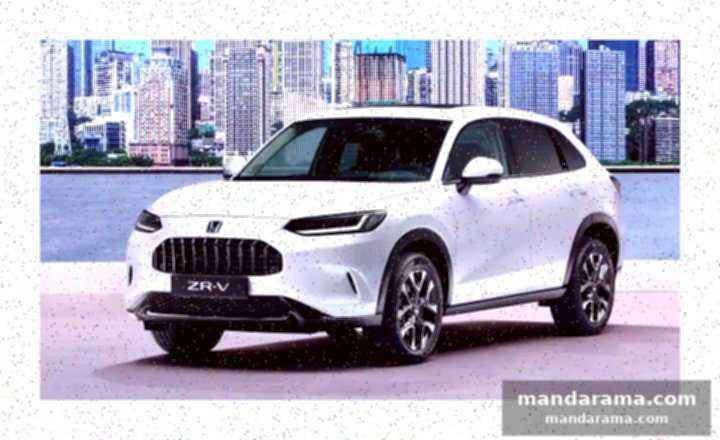
Beyond honda: a sector-wide crisis
Mibe’s warning isn’t an isolated concern. Ford CEO Jim Farley recently stated, “They [China] have enough production capacity in China, with existing factories, to supply the entire North American market; they’ll leave us all out of the business.” Similarly, former Toyota CEO Koji Sato admitted, “If things don’t change, we won’t survive.” This chorus of concern from industry leaders isn’t mere alarmism; it underscores a fundamental shift in the Automotive landscape.
The factors fueling China’s rise aren't solely about speed. It's a synergistic blend of a highly integrated supply chain, robust governmental support, and gargantuan production capacity. The old rules of Automotive competition—quality and brand loyalty—are being rewritten, and the established players are scrambling to adapt. As one industry analyst bluntly put it, “The question isn’t whether China will dominate, but how much market share the West can salvage.”