Spain's 2026 car buyers face eco-label reality
Forget flashy extras – in 2026, the most crucial feature for a new car purchase in Spain will be the DGT's ECO label. It’s quietly becoming the gatekeeper to benefits, and increasingly, it’s accessible without breaking the bank. This isn't just a trend; it's a pragmatic shift reshaping the Spanish Automotive landscape, and the Renault Clio and Kia Stonic are prime examples of this evolving dynamic.
The hybrid head-to-head: clio vs. stonic
The comparison is, admittedly, slightly unorthodox. The Renault Clio is a quintessential supermini, while the Kia Stonic leans into the compact SUV aesthetic. Yet, they both cater to a similar demographic, sharing roughly the same footprint, performance range, and price point. Our focus is on their hybrid iterations – which represents the smarter choice?
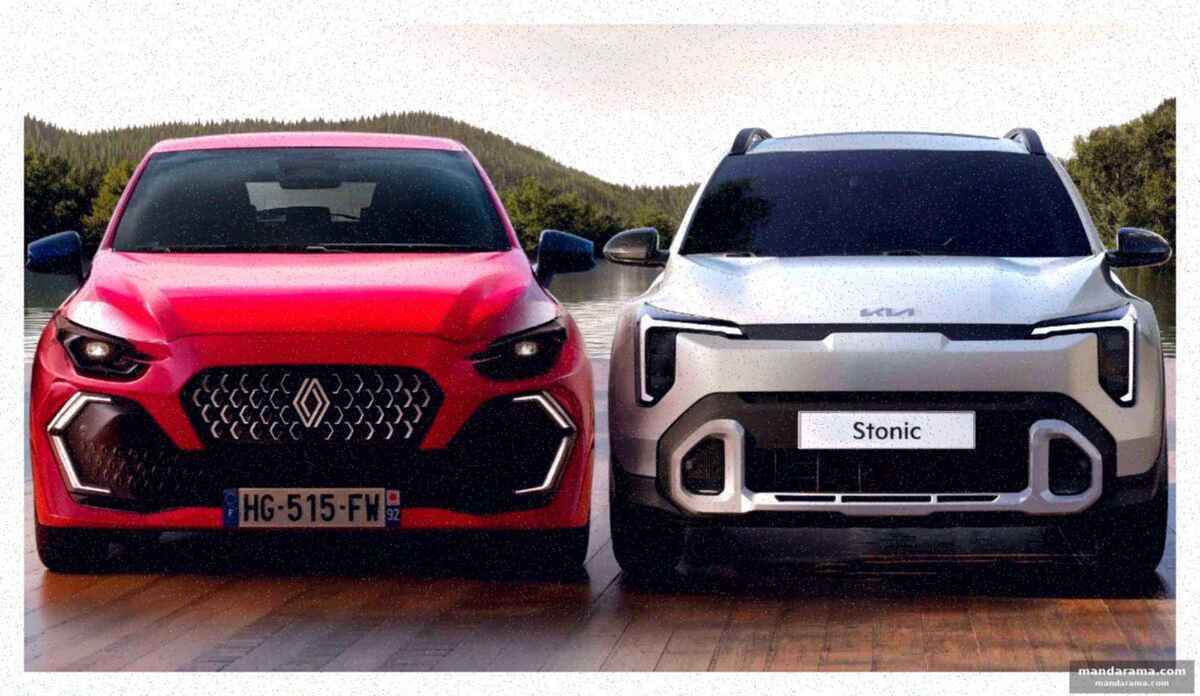
Design: a tale of generations
The Clio boasts a strikingly fresh design, recently unveiled in its new generation. The Stonic, while not brand new, has undergone a significant facelift that keeps it looking competitive. Its proportions remain familiar – a slightly elevated hatchback with the typical SUV accoutrements like lower plastic cladding. However, the front end has received a particularly noteworthy overhaul. The redesigned headlights, adopting a distinctive 'T' shape echoing the brand's EV models, and a reimagined 'tiger nose' grille (though now devoid of a traditional mesh) are immediate differentiators. The Clio, conversely, exudes athleticism, with a bold front grille, a more assertive hood, and eye-catching light clusters. Defined side panels and a subtle rear spoiler complete the picture.

Size and space: clio holds the advantage
Despite their differing classifications, the dimensions are remarkably close. The Clio measures 4.116 mm in length, 1.768 mm in width, and 1.451 mm in height, with a 2.591 mm wheelbase. The Stonic is slightly larger at 4.165 mm long, 1.760 mm wide, and 1.520 mm high, with a 2.580 mm wheelbase. However, the Clio definitively wins in cargo space, offering a generous 391 liters that expands to 1.776 liters with the rear seats folded down. The Stonic, in comparison, offers 352 liters, expandable to 1.155 liters.

Powertrains: a divergence in hybrid strategies
Both models offer a gasoline-only option, but we’re concentrating on their hybrid variants. Here, the strategic differences become apparent. The Kia opts for a mild-hybrid system, while the Renault employs a full hybrid setup. The Stonic’s 1.0 T-GDI engine, bolstered by a 48V system, provides a modest reduction in consumption and emissions, paired with either a 6-speed manual or a 7-speed automatic transmission, achieving 5.5 l/100 km and 123 g/km (manual) or 5.4 l/100 km and 122 g/km (automatic). The Clio, however, utilizes Renault’s E-Tech full hybrid system, a 160 hp powertrain exclusively paired with a multimode automatic transmission, delivering an impressive 3.9 l/100 km and just 89 g/km of CO2.

The bottom line: price and equipment
The base prices are relatively similar, but the hybrid versions tell a different story. The most affordable Kia Stonic hybrid starts at €19,380, while the Renault Clio’s hybrid entry point is a steeper €23,269. The Stonic's standard 'Concept' trim includes driver fatigue detection, LED daytime running lights, electrically adjustable and heated mirrors, a 4.2-inch digital instrument panel, a 12.3-inch central display, navigation, Kia Connect (Android Auto/Apple CarPlay), lane-keeping assist, speed limit recognition, and front and rear parking sensors. The Clio’s ‘Evolution’ trim offers rear parking sensors, LED headlights, pedestrian and cyclist emergency braking, and the OpenR Link system with a 10.1-inch screen and four-speaker sound system.
Ultimately, choosing between these two comes down to priorities. The Kia Stonic offers a cost-effective entry point to the ECO label, with a mild-hybrid system that provides a tangible benefit without a significant price hike. However, the Renault Clio’s full hybrid powertrain delivers markedly superior performance and efficiency, albeit at a premium. The €4,000 price difference isn’t insignificant, especially in the value-conscious world of mainstream car buying. The Clio's fresh design and advanced hybrid technology simply justify the higher investment, particularly given that it's a brand-new model compared to the Stonic’s refresh.