Twingo’s wild twin: a japanese prep’s v6 rebellion
The Renault Twingo is enjoying a surprising resurgence, thanks to its electric reincarnation – a retro-inspired homage to its iconic first generation. But we’re skipping the hype. Instead, we’re diving into a far more audacious project: the C’eLavie 105 Maxi, a Frankensteinian creation born from a forgotten Twingo variant and fueled by a frankly baffling passion.
A forgotten gem, reborn in fury
It’s easy to get lost in the current wave of electric Twingos, but this story began in 2024 with a Japanese preparer, Cars Hatano. He took a model that was already delightfully unconventional – a rear-wheel-drive city car – and utterly dismantled it. This wasn’t a simple aesthetic tweak; it was a full-blown assault on the Twingo’s identity, transforming it into something…else.
The result? The C’eLavie 105 Maxi. It’s a statement, a provocation, and frankly, a bit terrifying. A conventional utility vehicle gets a makeover, but this is a complete reinvention, aiming for a mini-supercar status with a monstrous V6 engine – a concept that fundamentally contradicts the Twingo’s original design ethos.

From city bug to v6 beast
To truly appreciate the scope of this transformation, consider the starting point. The third-generation Twingo was already a quirky outlier, boasting rear-wheel drive and a diminutive 0.9-liter, three-cylinder turbocharged engine producing just 109 horsepower. It was designed for urban efficiency, a compact, nimble machine – hardly a recipe for performance. Hatano clearly had other ideas.
The C’eLavie 105 Maxi represents a radical shift. The bodywork has been brutally widened by a staggering 210mm, granting space for significantly wider tracks and allowing for a much more aggressive stance. It’s not just about looks; this expansion is critical for accommodating the ambitious mechanical components Hatano envisioned. The transformation is extensive, incorporating oversized wheel arches, a dramatic six-LED headlight cluster, a massive rear wing, and a sculpted diffuser with an elevated exhaust.

Forged in fire: the ravage legacy
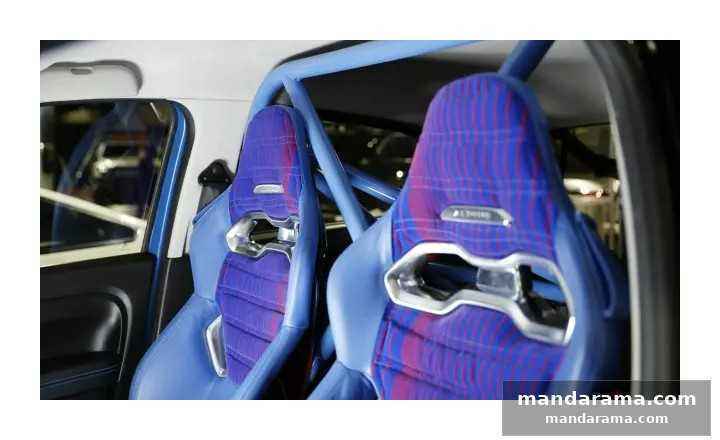
The visual cues are undeniably familiar. The wheels are a direct descendant of a design originally created by the French preparer Ravage for the Alpine A110, a testament to a shared appreciation for aggressive styling. But beneath the surface lies a level of engineering complexity that’s truly remarkable. The removal of the rear seats and the installation of a roll cage speak volumes about the intended purpose of this machine – a track-ready beast, not a city commuter.
V6 dreams, structural changes
Initially, the prototype retained the original engine, but Hatano’s plan was always to swap it for a powerful, naturally aspirated V6. And remarkably, the car is already configured to accept such an engine. The displacement is rumored to be around 3.5 liters, potentially mirroring the output of engines found in vehicles like the Renault Twin’Run. If that’s the case, we’re talking about a performance increase of over 300 percent – turning a humble city car into a seriously potent machine.
To handle this increased power, significant structural modifications have been implemented. The switch to a two-seat configuration not only frees up valuable space but also dramatically improves chassis rigidity thanks to the roll cage. Aerodynamic enhancements – including redesigned air intakes, rear extractors, and a refined diffuser – are crucial for managing airflow and maintaining stability at higher speeds. In a vehicle as compact as the Twingo, these elements are absolutely essential to prevent unpredictable handling.

A one-off legend
The crucial caveat? The C’eLavie 105 Maxi remains a one-off prototype, a stunningly audacious concept that never progressed beyond the Tokyo Auto Salon. Two years later, it’s effectively a lost cause. However, a slightly more restrained version, the C’eLavie 105, did see the light of day in Japan, retaining the widened bodywork but with a more realistic power output of around 140 horsepower. But the original, the Maxi – that’s the story that truly matters.